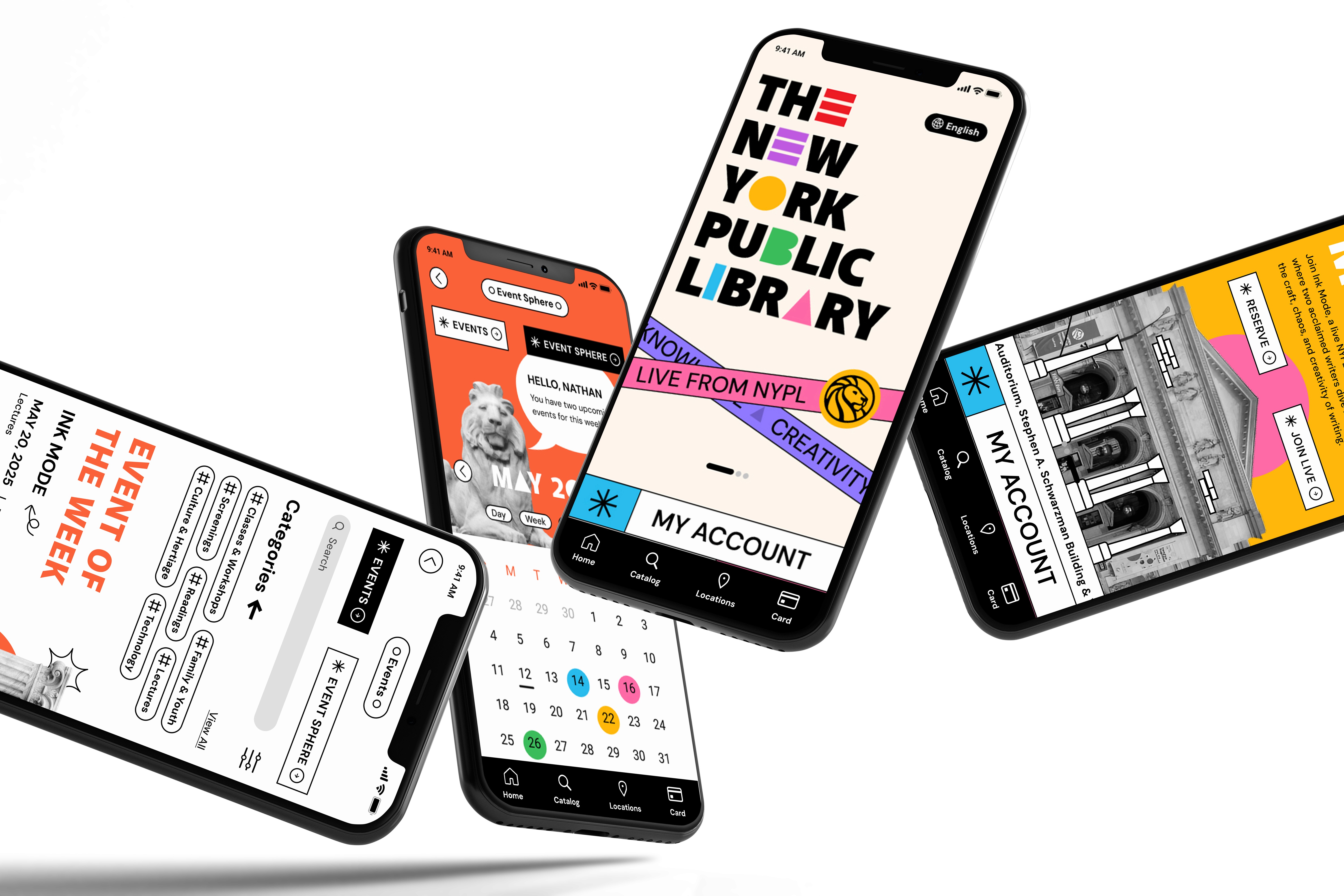
01
OVERVIEW
02
DESIGN PROCESS

03
USER PERSONA




04
HOW IT WORKS
FEATURE 1

Problem
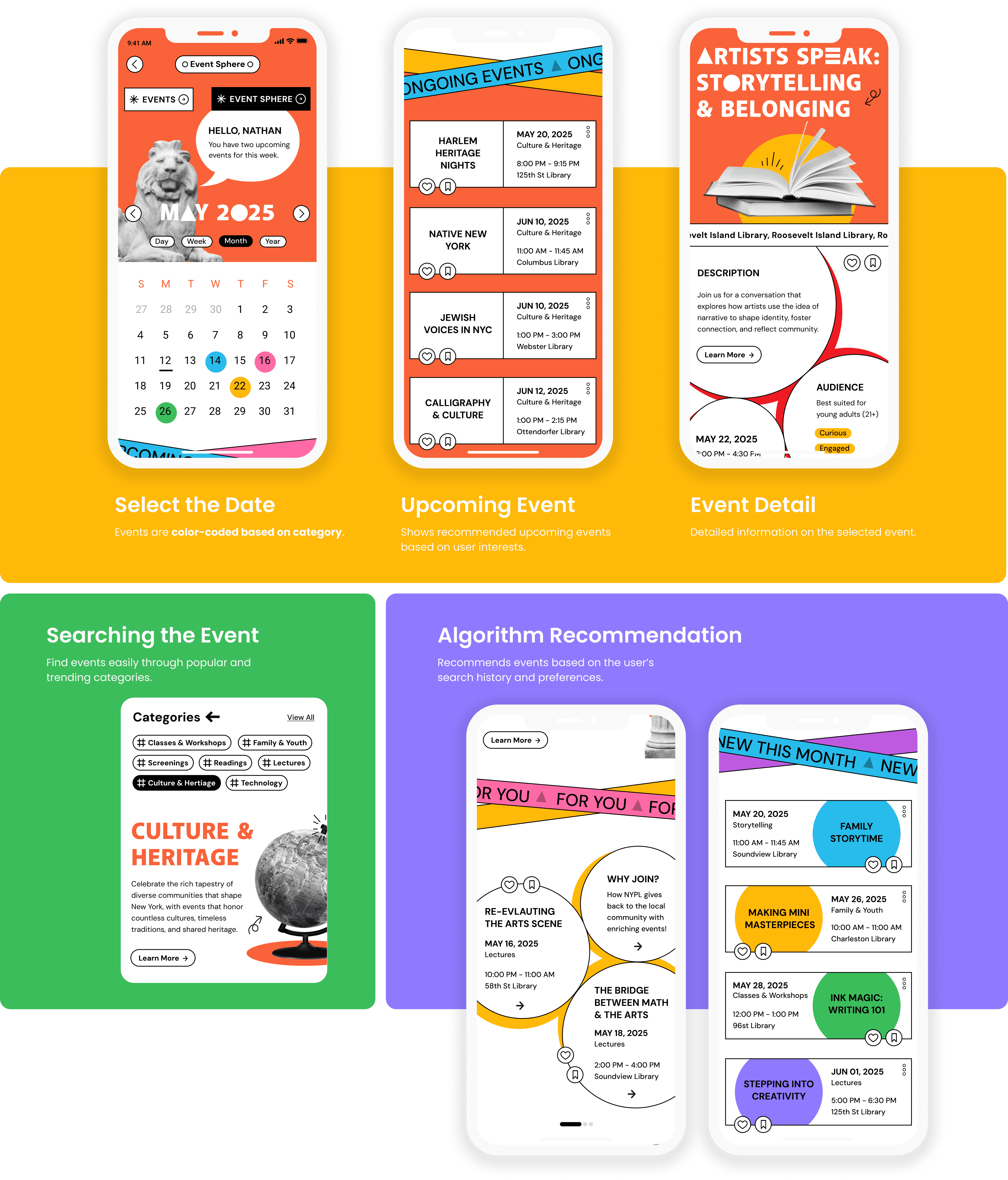
The app offers no personalized data tools or interest based recommendations, has an inefficient interface, and lacks community insight.

Solution
“Event Sphere” offers a unified dashboard where users can manage events with personalized, community informed planning.
Impact
Success will be measured by a 30% increase in event sign ups and participation, along with a 20% rise in return visits to physical NYPL locations.
FEATURE 2

Problem
Students struggle to stay focus and find a distraction free, quiet study environment during exam season.

Solution
Users can check the crowd levels, seat availability and study zones of all NYPL branches before visiting. If needed they can reserve a select space or seats to ensure they get the spot they need to stay focused.

Impact
Success will be measured by reaching 10,000 reservations per month, achieving a 75% successful reservation usage rate, maintaining a 40% user return rate, and increasing overall seat occupancy to 85% across NYPL branches.
FEATURE 3

Problem
Users struggle with networking and collaboration, they require a diverse community of individuals to connect and engage with in a meaningful and enjoyable way.

Solution
Users can access “Peer Society” to explore various peer generated content, filter it based on their preferences, and network with others at events.

Impact
Success will be measured by maintaining an average engagement rate of 15% including likes, comments, and shares. High participation and consistent, valuable contributions will indicate the platform’s effectiveness.
FEATURE 4

Problem
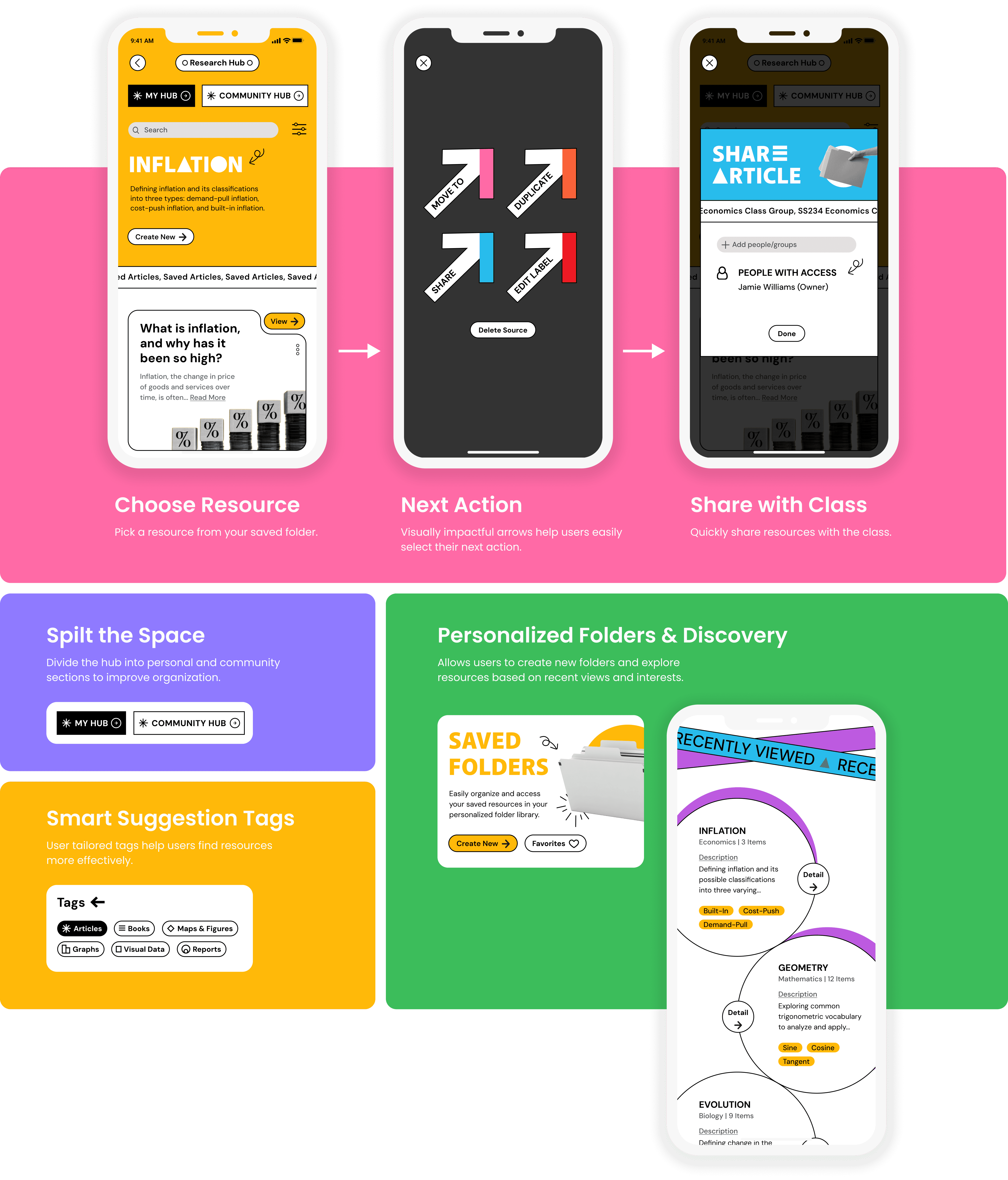
Users struggle to find NYPL’s valuable resources in one organized place, and sharing them requires extra steps.

Solution
A systematic folder space helps users organize their resources in one place and share them easily with others.
Impact
Success will be measured by a return rate of 40% of users using Research Hub is achieved as well as a 25% increase in saved resources.
05
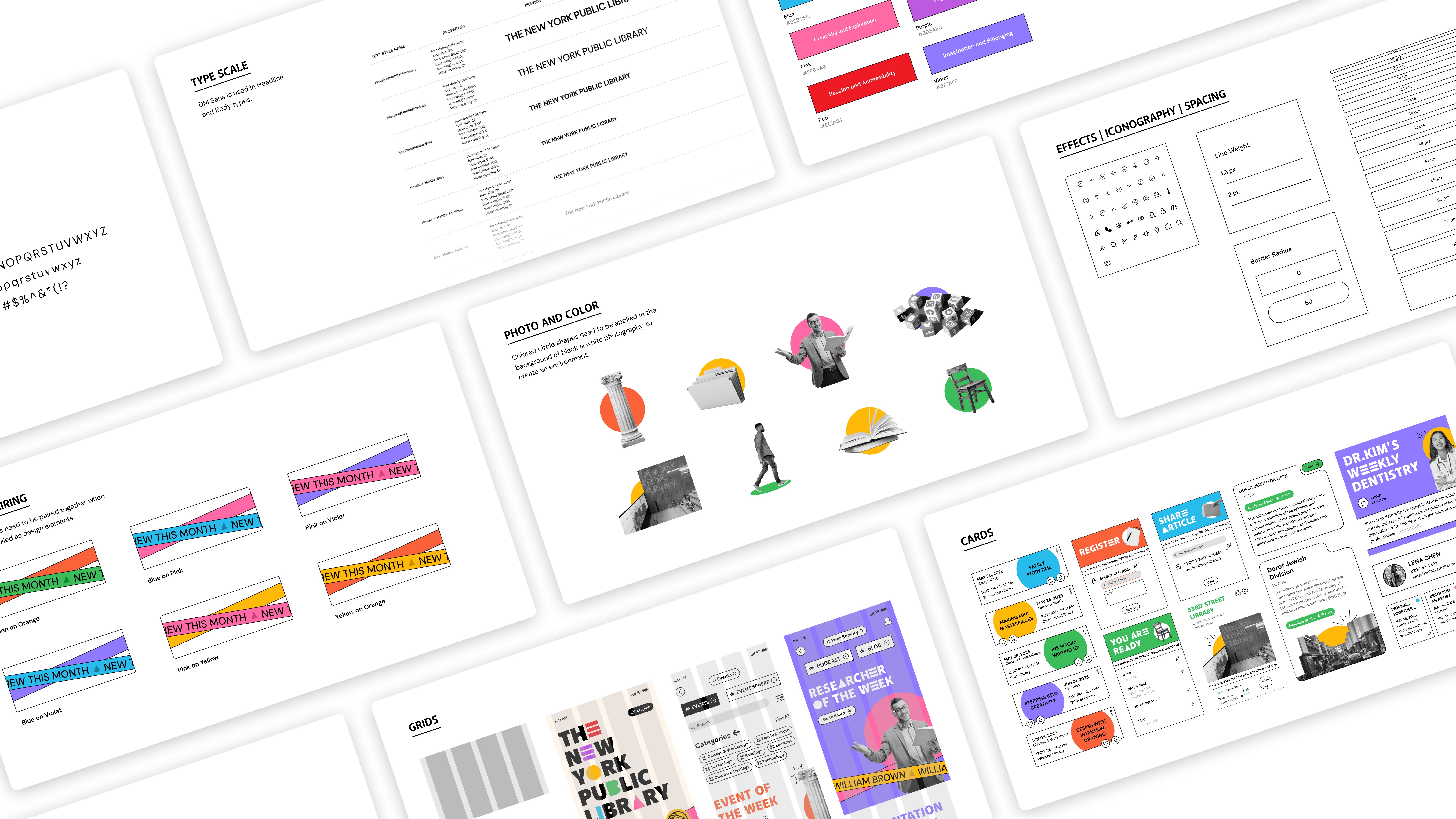
DESIGN SYSTEM
06
CONCLUSION
Back to top